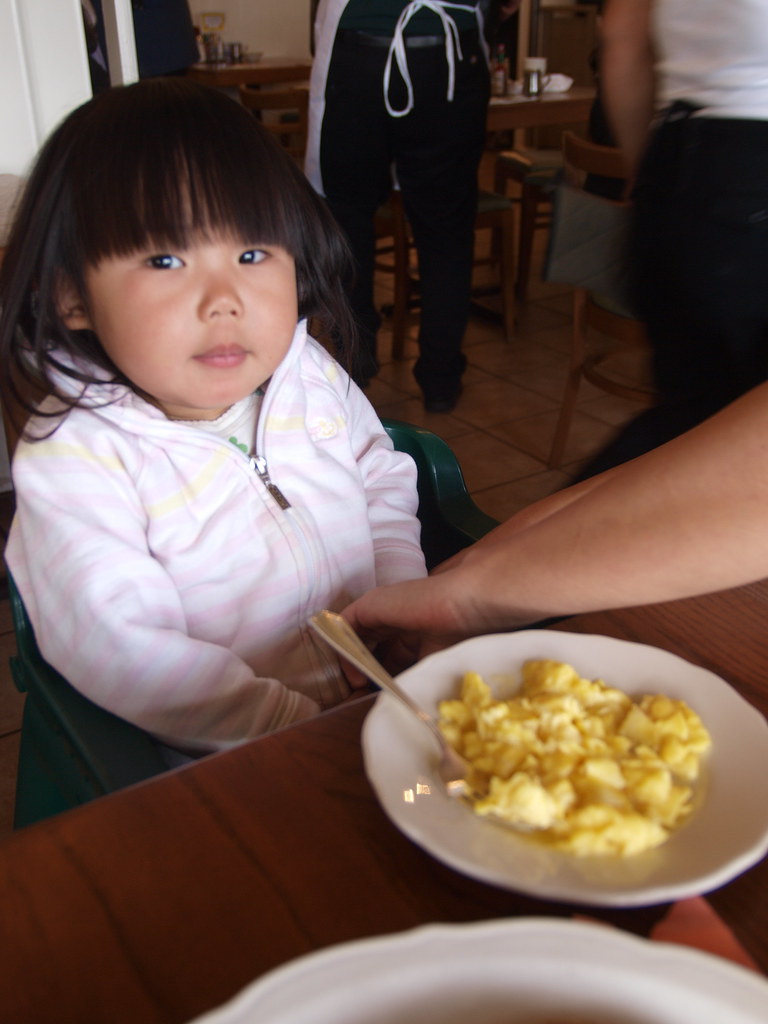
At 5:42 p.m. on a Thursday in late March, Anaya Patel, two years and four months old, looked at a small bowl of dal her mother had spent forty minutes cooking and said, in the precise diction of a child who has just discovered the word, no.
Her mother, Priya, set down the spoon. She did not sigh, exactly, but something in her shoulders moved.
This was the fourth refusal of the week. The dal had been a favourite in February. In March, apparently, it was not.
Priya had asked The Cradle Press to come watch a normal dinner. There is no such thing, of course. A reporter at the table changes the table. But the dal was real, and the refusal was real, and the small chair Anaya climbed out of three times in seven minutes was real.
What follows is six approaches the Patels tried over the next two months, with notes. None of them worked every time. Two of them worked more often than the others. One of them, the family abandoned.
Approach one: the deconstructed plate. Priya separated the dal into its components and put rice, plain lentils, a wedge of cucumber, and a small spoon of yoghurt on a divided plastic plate. The theory, recommended by Anaya's paediatrician at the Trillium clinic, was that toddlers often refuse mixed foods because the texture overwhelms them.
Anaya ate the cucumber. She touched the rice. She pushed the lentils to the edge of the plate and said no with great clarity. The yoghurt, she ate with her fingers.
Notes: partial success. The cucumber was a win the family had not anticipated. Priya started keeping cut cucumber in a small container in the fridge from then on, and Anaya ate cucumber every day for six weeks.
Approach two: the shared plate. One Sunday, Priya served the family dinner on a single large platter in the middle of the table and gave Anaya a small fork. The idea, borrowed from a friend in Hyderabad, was that the platter would feel like a participation rather than a presentation.
Anaya climbed onto her father's lap and ate three pieces of chapati that he tore for her, and a small amount of paneer. She did not eat the dal. She did, however, stay at the table for twenty-two minutes, which was a record.
Notes: moderate success. The shared-platter dinner became a Sunday ritual. On weeknights, Priya did not have the energy for it.
Approach three: cooking together. On a Wednesday in early April, Priya let Anaya stand on a small wooden step at the counter and stir a bowl of yoghurt and chopped mint. Anaya stirred with great seriousness for about ninety seconds and then put the spoon in her mouth.
She ate two spoonfuls of the raita she had helped make. Priya called this a victory and did not mention that Anaya had also dropped the bowl on the floor.
Notes: success, with a caveat. The cooking-together approach required forty minutes of Priya's full attention and produced, on a good day, six bites of food. On a hard day, it produced a wet floor and a crying child. It was not a weeknight strategy.
Approach four: the bribery, frankly. Priya did not call it bribery. She called it positive reinforcement. The deal was: three bites of dinner, then a small piece of chocolate from the tin on top of the fridge.
Anaya understood the deal immediately. She ate three precise bites, in some cases the smallest possible bites a human can take, and then waited, hand out, for the chocolate. After two weeks, Priya stopped. The negotiation had begun to feel like the entire dinner.
Notes: abandoned. Worked in the short term. Felt wrong in the long term. Priya's mother, on a video call from Pune, said, you taught her that food is the price of chocolate. That was the end of approach four.
Approach five: the no-pressure plate. Borrowed from the work of Ellyn Satter, whose Division of Responsibility framework the paediatrician had recommended in a leaflet: the parent decides what, when, and where. The child decides whether and how much.
Priya started putting Anaya's portion on her plate without comment and eating her own dinner. If Anaya ate, fine. If she did not, dinner ended at 6:30 and there was no snack until breakfast.
The first three nights were terrible. Anaya cried at 7:15 because she was hungry. Priya almost broke. On the fourth night, Anaya ate a small portion of rice and dal without being asked. By week three, she was eating most dinners, not all, and not always the same things.
Notes: most successful, also the hardest. Required Priya to tolerate her child being hungry at bedtime, which is a thing no parent enjoys.
Approach six: lowering the stakes. Priya started cooking less elaborately. A weeknight dinner became dal from a jar, frozen peas, plain rice, and a piece of fruit. If Anaya ate the fruit and one bite of rice, Priya counted it. She stopped counting bites.
This was not a feeding strategy so much as a parenting one. Priya wrote, in a note she sent to me later, I think I was making the food too important. When I stopped, she started eating more of it.
Two months in, Anaya eats most of her dinner most nights. Some nights she eats nothing. The Patels are no longer keeping a chart. The cucumber, still, every day.