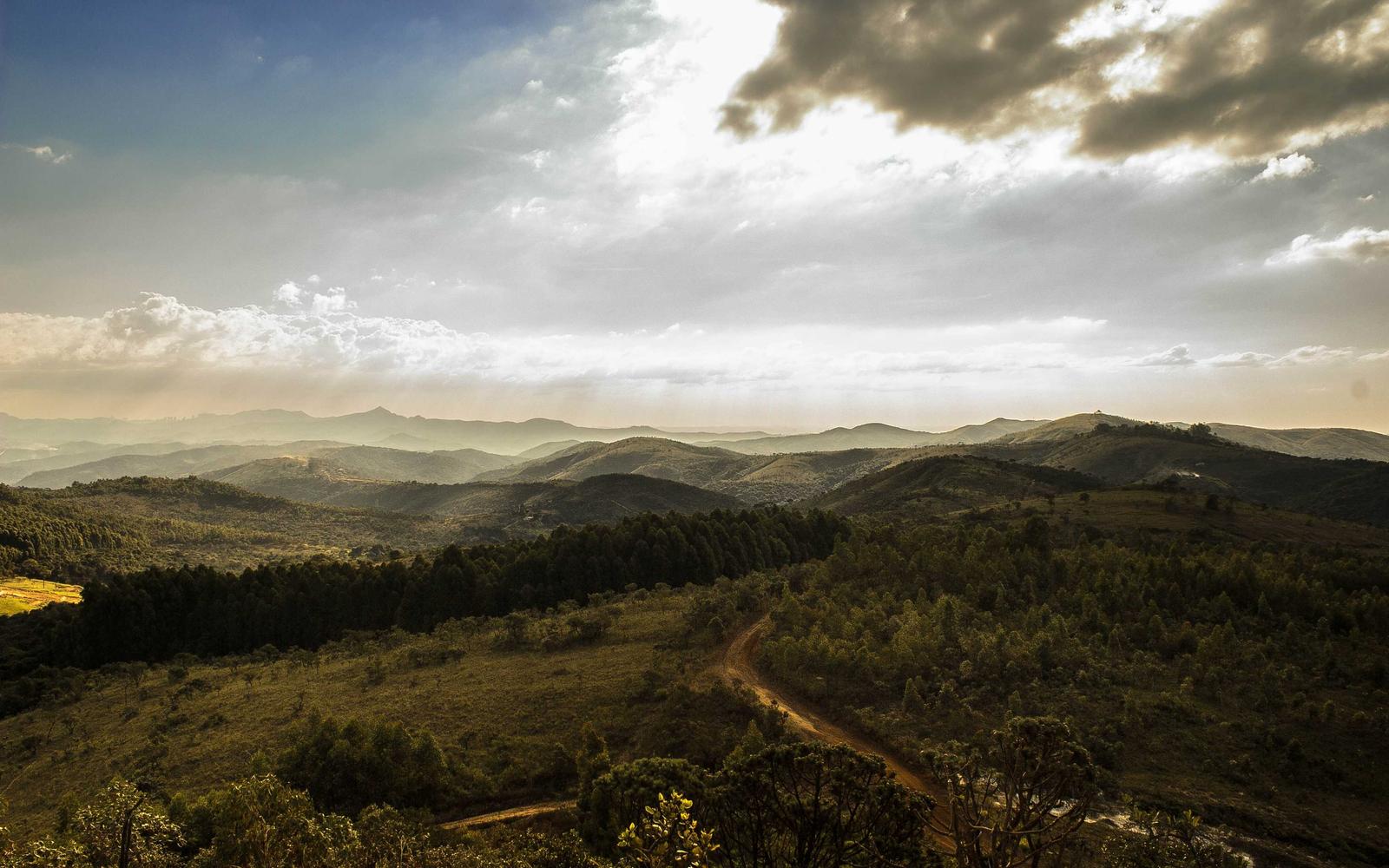
The tree is a white oak, Quercus alba, of indeterminate age, near the Centre Street gate of the Arnold Arboretum in Jamaica Plain. The lowest large limb is about seven feet off the ground. The next is at eleven. After that the structure opens up.
Wren Halligan went there on the first Saturday of May 2026 and the next Saturday after that, with a notebook and a folding stool, and watched.
She counted twenty-three children, between roughly four and twelve, who climbed the tree across the two afternoons. She did not interview any of them. She watched.
The first thing she wrote down was that no child climbed the tree on first arrival. Every child stood near it, sometimes for a minute, sometimes for ten, before they reached for the first foothold.
The youngest who climbed, a girl of maybe four, did not get past the first branch. Her father, who was watching from twelve feet away with his hands in his pockets, did not move. She tried twice, slipped both times, and walked back to him without crying.
Wren noticed that several children had a recognizable approach: they walked the perimeter of the tree first, looked up, then chose their starting handhold.
Others did not do this. They came at the tree from one direction and climbed where they arrived. These children, on average, climbed less high.
The oldest child to climb on the first Saturday was a boy of perhaps eleven, with a green backpack he did not take off. He reached the third major branch fork, about eighteen feet up, sat there for a long time, and read what looked like a paperback.
His mother sat on a bench across the path and read her own book. They did not communicate.
What Wren had come to write about was risk. She had come to write about the gap between how children climb trees and how adults imagine children climb trees. She had read the literature on risky play — Ellen Sandseter at Queen Maud University in Trondheim, Mariana Brussoni at UBC — and wanted to see whether what she saw matched what she had read.
It mostly did.
The children, almost without exception, climbed to the height at which they no longer felt safe and then stopped. Sometimes they stopped one branch lower. They rarely stopped one branch higher.
When an adult intervened from below — and Wren counted only four such interventions across the two days — the intervention was always: That's high enough. It was never: You could go higher.
The interventions did not change the outcome. The children stopped where they had already decided to stop. The adult comment seemed to function as ratification.
Falls were rare. There were three. None caused injury beyond a scraped palm. In two cases the child got down, stood up, and climbed back to roughly the same height within five minutes.
In the third case, the child, a girl of about seven, did not climb again. She walked back to her grandfather and sat with him on the bench. Twenty minutes later she got up and climbed the next tree over, a smaller red oak with lower branches.
The grandfather did not say anything either time.
Wren wrote down that the most consistent adult behavior across the two afternoons was not intervention, not coaching, not photography. It was looking elsewhere.
Parents looked at their phones, at other children, at the trees beyond the oak, at the ground. They looked at the climbing child in glances. The glances were frequent but brief.
She thought this looked like deliberate restraint, the kind that takes practice. She thought it was probably also self-protective. Watching a child eighteen feet up a tree is, for most adults, hard.
On the second Saturday, the boy with the green backpack returned. He climbed to the same branch and read the same book, or possibly a different book of similar size. Wren did not ask.
She left at 4:30 both days, with the tree still occupied. On the first Saturday a brother and sister were trying to reach a small bird's nest near the trunk, twenty-two feet up. They did not reach it. On the second they did not even try; they sat on the seven-foot branch and ate apples.
The notebook from the two afternoons has thirty-one pages. Most of the entries are very short. The longest entry reads, in full: The four-year-old came back at 3:15 and got past the first branch.