The cull happened on a Sunday afternoon in early April, in the upstairs bedroom of the house on Pine Street in Portland. Tess was seven. She had been seven for two months. The shelves had not been cleared in five years.
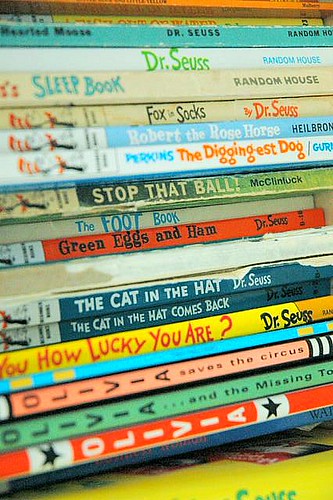
There were 184 books on the two long shelves above her bed. Most of them were picture books. Some of them had been hers since the hospital. A few had been her mother's, in the same yellow stickered library bindings.
The rule, decided by the family at breakfast, was that the books would be sorted into three piles. The pile to keep. The pile to give to the daycare on Cumberland Avenue. The pile to send to Tess's cousin in Camden, who was three.
Tess made the piles herself. Her father sat on the floor and did not interrupt unless she asked. Her mother took notes for an article that was not yet this one.
The first ten books went to the daycare pile without much discussion. They were branded board books from a vaccination giveaway. Tess did not remember them.
Then the work slowed. A book about a hippo who learns to share went to the Camden pile after a long pause. I think Owen would like this, Tess said, with the small judgement of an older cousin.
By the end of the first hour, the keep pile had only fourteen books in it. The Camden pile had thirty-eight. The daycare pile had ninety. Tess was tired and asked if she could have a snack.
After the snack, the work changed character. The remaining books were harder. Tess began to hold each one for longer. She would open it. She would smell the gutter. She would put it on the floor and stare at the cover.
Three books went to the keep pile in the second hour. Madeline, in the 1939 Viking edition that had belonged to Tess's grandmother. The Story of Ferdinand, by Munro Leaf, in the cheap mass-market paperback with the broken spine. Bread and Jam for Frances, by Russell Hoban.
Tess's mother asked her, gently, what made a book a keep. Tess thought for a while and said: It is a book I want to read to my children. Her mother did not write that down right away. She wrote it down later, after Tess had gone to bed.
By dinner, the keep pile had eleven books. The number was not planned. It just stopped at eleven, the way some numbers stop, with the quiet sense of being right.
The eleven books were these. Madeline. The Story of Ferdinand. Bread and Jam for Frances. The Snowy Day. Owl Moon. Goodnight Moon, the chewed board book. Each Peach Pear Plum. The Tale of Peter Rabbit. The Little House. Where the Wild Things Are. And a small unknown book from Tess's father's childhood, a 1981 Dutch import called Het Stoute Kind, which Tess could not read but had loved as the strangest book on the shelf.
The cull is not, in this house, a Marie Kondo exercise. There is no language about joy. There is no rule that demands a number. The work is older than that and quieter.
It is the work of choosing what to carry forward. Children's bookshelves accumulate the way the lower drawers of a kitchen do, by the slow accretion of well-meaning gifts and library sales and the occasional Sunday-morning impulse at a bookstore.
The accumulation is not bad. But once in a while it must be answered with a clearing, or the bookshelf becomes a warehouse instead of a library.
The eleven that stayed are not the eleven a critic would choose. Het Stoute Kind is not in the Caldecott canon. The Madeline is sentimental in places. The Frances book is fifty-eight years old and the language about jam is a little dated.
But the keeping was Tess's. The criteria were Tess's. She used the only criteria that matters in a private library, which is whether the book has earned its space on this particular shelf in this particular house.
The ninety books that went to the daycare were dropped off the next morning, in two cardboard boxes from the wine shop on Congress Street. The director said they would be put on a low shelf and read in two-year-old laps.
The thirty-eight that went to Camden were put in a brown grocery bag with Owen's name written on it in Sharpie. They were delivered on the third Saturday of April, which is when Tess's family goes to Camden.
The shelves at home looked different. There was room now. There was space between the books. A small terra-cotta horse from Tess's great-grandmother could sit on the shelf, where before it had been crowded off.
Tess stood in the doorway and looked at the new shelves for a long time. She said: It looks bigger. Her mother said: It is the same shelf. Tess thought about that and said: The room is bigger.
She was right. The room was bigger. And the eleven books that stayed had become the eleven books they were, with their own weight, instead of being eleven of a hundred and eighty-four.
A cull is not a loss. A cull is the small ceremony by which a private library becomes a library at all. The books that stayed will be read. The books that went will be read elsewhere. That is the whole of it.