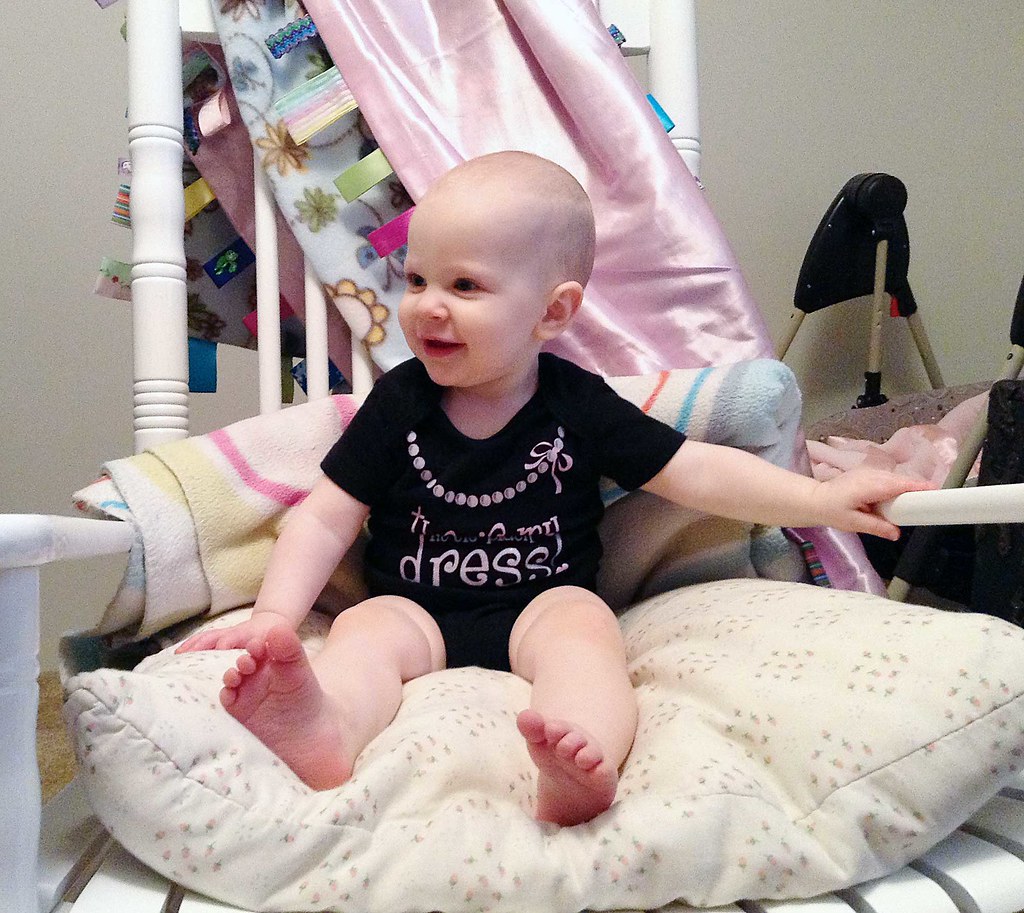
Anya Brooks-Vance came home from Maine Medical Center on a Tuesday afternoon in late April, weighing six pounds eleven ounces and looking, her father said, like a small surprised loaf.
By the second week, her parents had stopped counting the hours and started counting the songs. Three songs got her down. Four, on a bad night. Five if her father was on his own.
The rocking chair was a Craigslist find from a house in Cape Elizabeth, $40, the seat a little bowed in the middle. It made a small dry creak on the upstroke. They came to love that creak. It became, by the end of the second week, the sound of progress.
Eliza Brooks, the mother, is thirty-four and an architect. She had imagined, before Anya, that she would write something during the maternity leave. A long letter to a friend in Vermont. A draft of an essay about her grandmother's house in Bath. By the second week, she had written half a grocery list.
The second week is the one nobody warns you about, she said, sitting in the kitchen on a Thursday morning while Anya slept in a sling against her chest. The first week you have visitors. People bring lasagna. Your mother is there.
The second week the visitors have gone home. The lasagna is finished. Your mother has flown back to Indianapolis. Your husband has, technically, returned to work, even if he is working from the dining table and getting nothing done.
The second week, in other words, is when the work begins.
There is a particular quality to 3 a.m. in a small house in Maine in April. The street is empty. The radiator clicks. The dog, who has decided she is the baby's personal sentry, sleeps on the rug with one ear up.
Anya wakes for the second feed at 2:47, give or take eleven minutes. Eliza has trained herself not to look at the clock until she is already in the chair. Looking at the clock, she has discovered, is a way of inviting in the math of how little sleep is left.
The latch, by the second week, is mostly good. There is a small click when it works. There is a long pulling silence when it does not. The lactation consultant, a woman named Dorothy Maines who drives out from Yarmouth, has come twice. She is patient. She has seen everything.
What Dorothy Maines told them, on the second visit, was this: the second week is when most mothers cry in the chair. The hormones, she said, are doing a controlled demolition. The body is recalibrating. Crying in the chair is not failure. Crying in the chair is data.
Eliza cried in the chair on the Wednesday of the second week. She cried because Anya would not latch on the left side. She cried because the dog had stepped on her foot. She cried because she had, that morning, found a pair of her pre-pregnancy jeans at the bottom of a drawer and put them in a bag for Goodwill without trying them on.
Anya, by some grace, slept through it. The crying did not wake her. The crying did not, as Eliza had half-feared, transmit itself through the milk like a chemical signal. Anya slept against her mother's collarbone and made the small wet breathing sound that, two weeks earlier, had not existed in the world.
Caleb Vance, the father, is a school librarian at a middle school in South Portland. He has the gift, rare in new fathers, of being able to take the night feed without conversation. He does not narrate. He does not problem-solve. He sits in the chair with the bottle of pumped milk and lets the work be the work.
By the end of the second week, they had a rough rhythm. Eliza took the 11 p.m. and the 5 a.m. Caleb took the 2 a.m. The middle one, which was the cruelest, belonged to him.
Caleb's playlist for the 2 a.m. feed, in order, was: Blackbird, sung quietly, badly; Edelweiss, which he had not realized he knew until Anya was born; a James Taylor song his own father had sung to him; and, if all else failed, the slow movement of a Brahms intermezzo he had once learned on the piano and could now only hum.
He told a colleague at the school, the following Monday, that the 2 a.m. feed had become his favourite hour of the day. He said this slightly defensively, as if he expected to be mocked. The colleague, who had three grown children, did not mock him. She said, that is the hour you remember.
By the Saturday of the second week, Anya took her first bottle without protest. By the Sunday, she slept a four-hour stretch. By the following Tuesday, two weeks and a day in, Eliza wore real pants for the first time. The Goodwill bag was still in the corner.
Dorothy Maines came back on the Wednesday and pronounced the latch fixed. She left a note on the counter, in pencil on the back of an envelope: feed, change, sleep, repeat, and forgive yourself the days you do not.
The chair, the creaky one from Cape Elizabeth, has a small bald patch on the left arm where Eliza's thumb has worn the varnish off. She does not plan to refinish it.
Anya is, as of this writing, four weeks old. She has started, occasionally, to look at her parents as if she has begun to suspect they are people. The 3 a.m. feed is still happening. The rocking chair still creaks. The dog still keeps her one ear up.
Eliza has not written the long letter to her friend in Vermont. She is not, at the moment, planning to. The second week ended. The third week ended. The work is the work.
Filed under