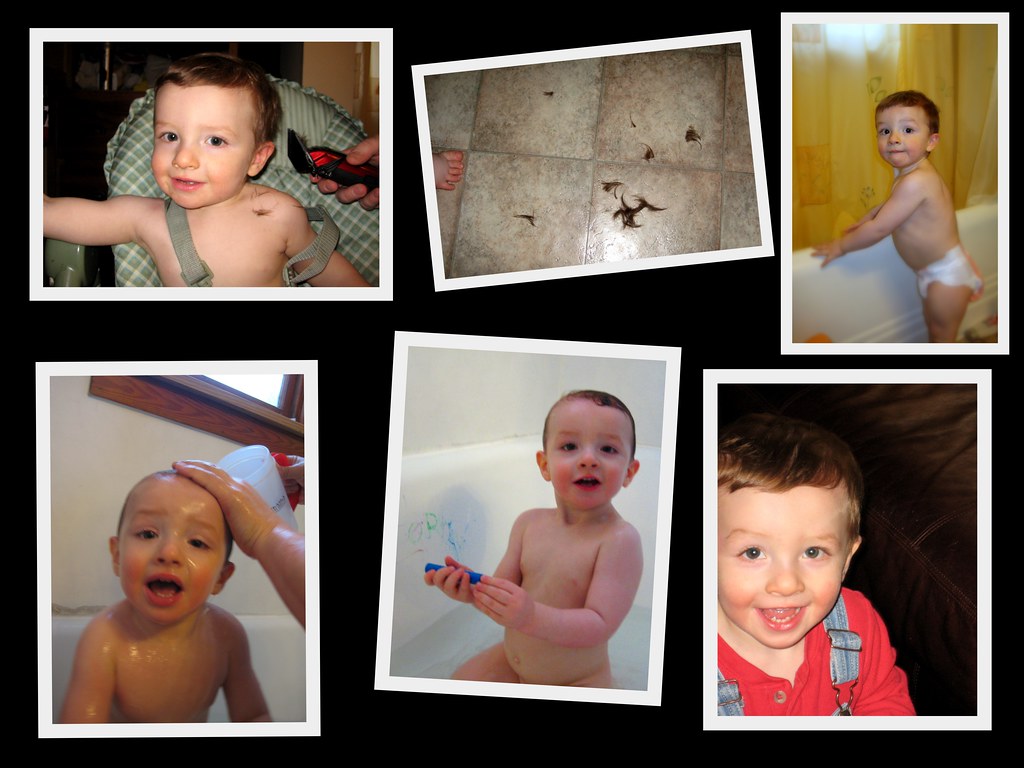
Felix Marin-Brennan, nine months and four days, has decided that the most interesting object in the world is a wooden spoon. His mother, Tess, is on the floor beside him, trying to think of what to make for dinner.
It is a Wednesday in May. The light in the small living room in Westbrook, Maine, is the particular pale yellow of late afternoon at this latitude. The radiator is off. The window is open, and somewhere down the block, a lawnmower is going for the first time this season.
Felix has the spoon by its bowl. He waves it. He drops it. He looks at it, with mild scientific interest, as if surprised that it has not moved on its own. He picks it up by the handle. He puts the handle in his mouth.
The slow days are not, as a category, written about much. The internet, as Tess has noted, is full of milestone weeks. The first tooth. The first crawl. The first wave. The slow days, the long Wednesdays between the milestones, are the actual fabric of the first year, and almost no one writes about them.
Felix crawled for the first time at seven months and two weeks. He waved at eight months and one day. He has, as of this week, six teeth, two of which arrived in the same forty-eight hours and both of which Tess has documented on a calendar pinned next to the fridge.
Between those things, there have been roughly two hundred days. Some have been hard. Most have been like this one. Felix on the floor with a spoon. Tess on the floor with him. A pot of chicken stock simmering on the back burner because she forgot, three hours ago, that she had put it on.
Tess is thirty-one. She works, on the days her mother-in-law comes over, as a freelance copyeditor for a university press in Boston. On the other days, which is to say most days, she is on the floor.
The thing about the floor, she has come to think, is that it is the country you live in for about a year. You learn its furniture from below. You learn which corners gather dust. You learn that the rug has a small burn mark near the radiator that nobody else has ever noticed.
Felix has discovered, in the past week, the trick of pulling himself up to standing. He does this with the coffee table. He does it with his mother's knee. He did it once, terrifyingly, with the lid of the laundry hamper, which is not load-bearing.
Standing, for Felix, is not yet a means to anywhere. It is an end. He pulls up, locks his small knees, and looks around with the pleased expression of a man who has just bought a house.
Then he sits down, hard, on his diaper. Sometimes he laughs. Sometimes he looks at his mother in mild reproach, as if she had been responsible for the floor's sudden arrival.
There is, Tess has noticed, no real schedule to the day. There is a wake-up. There is a first nap. There is a second nap, sometimes. There is, around 5 p.m., what the parenting books call the witching hour and what her own mother had called the half-light, when the baby is too tired to play and too awake to sleep.
Between these poles, the day is improvisation. They go to the small park three blocks east. They stand in the kitchen while Tess unloads the dishwasher and Felix, in his little chair on the floor, hands her, one by one, the plastic measuring cups.
They read Goodnight Moon, which is not, in Tess's quiet opinion, the best of Margaret Wise Brown's books, but is the one Felix's grandfather sent and the one Felix has decided is his book. They read it twice.
On Wednesdays, Tess's friend Annika comes over with her own ten-month-old, a girl named Wren. The two babies, placed on the rug, do what babies of this age do, which is sit in parallel and ignore each other with great concentration.
Annika and Tess drink coffee and talk about almost nothing. They talk about whether to start swim lessons. They talk about a podcast neither of them has finished. They watch Wren, who has a tooth coming, try to chew on the edge of a wooden block.
This is, Annika says, the easiest and hardest age. They are not yet walking. They cannot yet say no. They will eat what you give them. They will sleep, more or less, when you put them down. And yet. Eight hours alone with one of them, in a small house in May, can feel like a small geological era.
Tess does not, on the slow days, accomplish very much. She has, she calculates, written approximately four hundred words for the university press this week, in four-minute increments while Felix had a nap and she did not. She does not feel bad about this. She has decided not to.
What she does, on the slow days, is be present. Which is a phrase that has been worn smooth by overuse. What she means by it is something more specific. She means: she watches him discover the spoon. She watches him discover that the spoon has two ends.
She watches him, late in the afternoon, pull up on the coffee table and stand there for nine seconds, by her count, before sitting down. He has done this before. He will do it again. She watches it anyway.
By six o'clock, she has made a small dinner of roast chicken thighs from Sunday's leftovers and rice from the rice cooker. Felix sits in his high chair and eats small soft pieces of chicken with his fingers. He gets some of it in his mouth.
Her husband, Diego, comes home at quarter past six. He picks Felix up out of the high chair. Felix laughs. Diego carries him into the living room. The wooden spoon, abandoned on the rug, will be found three days later under the couch.
Tess does the dishes. The day, which had no plan, has ended. Tomorrow, which will also have no plan, will begin, when Felix wakes up, at twenty past six.
The slow days, she thinks, drying her hands, are the days you will not remember as days. You will remember them as a colour. The pale yellow May light. The radiator that was off. The spoon on the rug.
Filed under