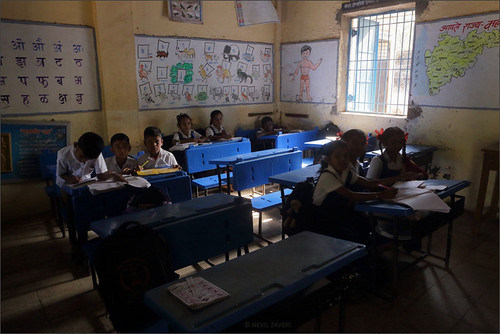
At Alcy Elementary, on the eastern edge of the Orange Mound neighborhood of Memphis, the first day of first grade in late August arrives the way it does every year: with a line of yellow buses pulled along South Bellevue, a hot wind off the parking lot, and the teacher of Room 112, Talisha Brown, standing at her open door.
Brown is forty-three. She has taught first grade in Memphis-Shelby County Schools for sixteen years, the last seven of them at Alcy. She grew up in Whitehaven, less than four miles south, and graduated from the University of Memphis in 2009.
Alcy Elementary serves about four hundred children, prekindergarten through fifth grade. Roughly ninety-six percent of the school's families qualify for free or reduced-price meals, and the school participates in the federal Community Eligibility Provision, which means every child eats breakfast and lunch at no cost.
Brown's classroom this year holds twenty-two first-graders. The list of their names, taped to the door, has been there since the previous Friday, when she came in to set up the room.
The room is hot. The window AC unit, installed in 2019, was working in July and is not working today. The custodial staff has been notified. "We'll see," Brown says.
She begins the morning by walking the hallway and greeting the kindergarten teacher across the hall, a young woman in her second year named Sade Ellis. They check each other's bulletin boards. They talk about the new principal, who started July 1.
At 7:40 the buses begin to unload. The first-graders are funneled to the cafeteria for breakfast. Brown stands at her door with a clipboard, intercepting children as they come up the stairs in clumps, helping the lost ones find their rooms.
Two children cry. One, a small boy named Jamal, is brought to Brown by his older sister, a fourth-grader, who hugs him at the door and then runs back down the hall to her own room.
Brown sits on the floor next to Jamal for three minutes. She does not say a great deal. She lets him be sad. Then she takes his hand and walks him to the carpet, where she has placed his name tag.
By 8:15 all twenty-two are in the room. They sit on a faded blue carpet with letters of the alphabet around the border. Brown sits in a small rocking chair at the front. She does not begin with rules.
She begins by telling them her name and where she grew up. She tells them she has a daughter in eleventh grade and a son in seventh. She tells them that she will be their teacher for the whole year, and that one of her jobs is to learn each of their faces and each of their names by the end of the week.
Then she asks them, one at a time, to say their names. She listens carefully. Some children whisper. One, a tall girl named Royal, speaks loudly enough that the kindergarten teacher across the hall later asks Brown who that was.
The Title I designation, which Alcy has held since the Elementary and Secondary Education Act was reauthorized in 1965, means the school receives federal supplemental funding tied to its share of low-income families. At Alcy this funds, among other things, two reading interventionists, a parent liaison, and a portion of Brown's classroom library.
The classroom library, which Brown has built over sixteen years out of garage-sale finds, donations, and her own purchases, is the most considered thing in the room. There are six hundred and twelve books, organized by genre, by series, and by reading level, in plastic bins on three low shelves.
She tells the children, on this first day, that the books are theirs. That they can take any book any time. That she would rather a book be loved and lost than untouched and tidy.
Morning meeting on the first day is short. Brown reads aloud one picture book: The Day You Begin, by Jacqueline Woodson. She has read it to her first day class every August for nine years.
Then the children tour the room. They learn where the pencils are kept. They learn the procedure for the bathroom, which involves a small wooden hook on the wall with a laminated paw print. They learn the signal for being quiet, which is one finger raised at her chest.
They do not, on the first day, do much academic work. They write their names. They draw a self-portrait. They color a small sheet that says I am a first-grader across the top.
Lunch is at 10:45, which Brown thinks is too early but which the school's master schedule requires because there are not enough cafeteria slots. The children eat in the cafeteria with a paraeducator while Brown plans for the afternoon.
The afternoon is for what Brown calls walking the school. She takes the class down the hall to the library, the nurse's office, the front office, the bus loop, the playground. She introduces them, by name, to the staff at each stop.
By 2:30 the children are visibly tired. Two are asleep on the carpet. Brown lets them sleep. The dismissal bell will ring at 3:00, and there will be enough waking up to be done then.
When the buses pull away at 3:15, Brown comes back upstairs and stands in the doorway of her room. The window AC is, miraculously, working. She closes the door, turns off the lights, and starts on tomorrow.
She has been a teacher long enough not to call the first day a success or a failure. It was the first day. The year is two hundred and seventeen days long, and she will see them all.