At East Montpelier Elementary, the kindergarten teacher's name is Hannah Berube. She has been teaching kindergarten in the same room, in the same building, on the same hill above the village, since 2007.
On a Tuesday in late April she arrives at 7:50, drinks half a thermos of coffee at her desk while reading the morning's emails, and turns on the small lamp by the reading nook before she turns on the overhead lights. She says she likes children to walk into a room that feels lived in.
There are fourteen kindergartners at East Montpelier this year. The school's total enrollment is one hundred and ninety-two, kindergarten through sixth grade. The building was finished in 1962 and was last renovated in 2009.
Berube grew up in Cabot, twelve miles north. She studied elementary education at Johnson State College and student-taught in Plainfield. She has, over the years, turned down two offers to move up to first or second grade.
"Kindergarten is the only grade where the work is also the relationship," she says. "In other grades the work begins to take precedence. Here, for the whole year, the relationship is the curriculum."
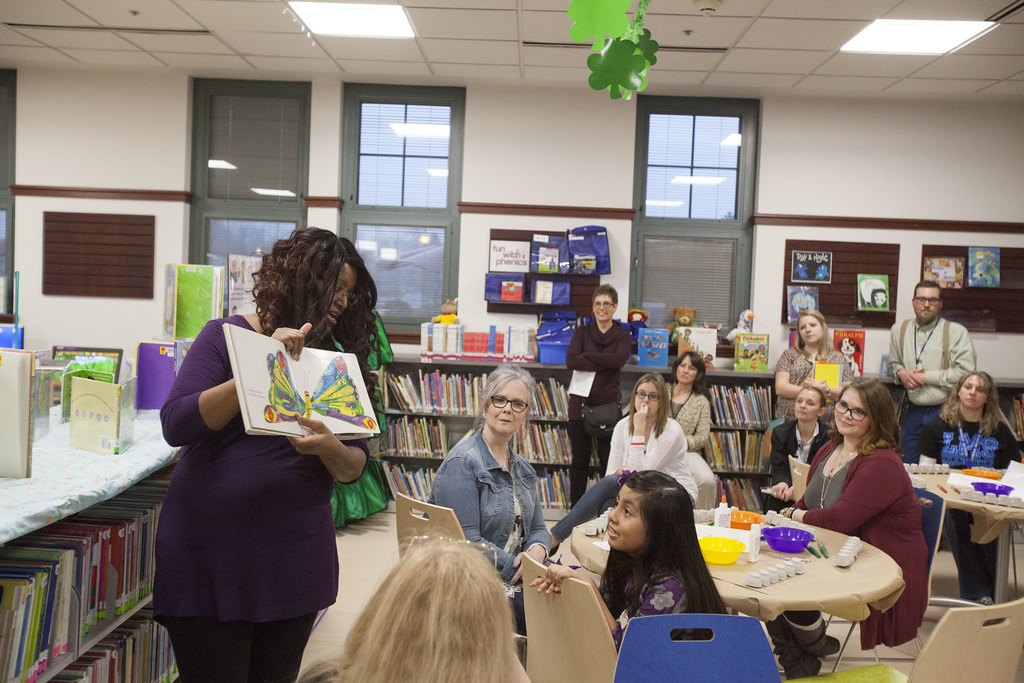
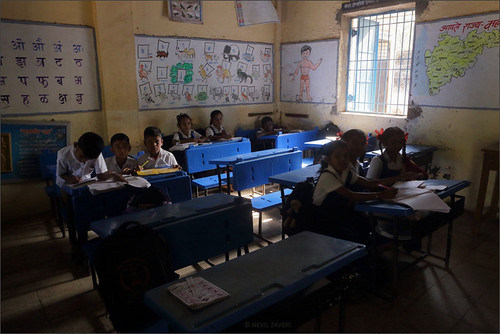
The classroom is bright and a little cluttered. There are book bins, a small carpeted meeting area, a sand table near the window, a coat rack with each child's name in laminated cursive, and a row of mailboxes with construction-paper notes folded into them.
Children begin arriving at 8:10. Berube greets each one at the door. She kneels for some, hugs others, and tells one boy, a thin four-year-old named Owen, that his sister was very kind at recess yesterday and she wanted him to know.
Morning meeting begins at 8:30. The class sits in a circle on the carpet. Berube has a small wooden box from which she draws a question: What is one thing you noticed on the way to school?
A girl named Mira saw a deer at the edge of the woods on Coburn Road. A boy named Felix saw his grandfather's truck. One child, asked the question a second time because he was looking at the ceiling, says, after a long pause, that he noticed his shoes.
Berube writes each observation, in marker, on a long roll of paper she keeps for this purpose. The roll, by April, is over thirty feet long. It hangs around the perimeter of the room at child height.
The literacy block begins at 9:15. The school uses a structured-phonics curriculum the district adopted in 2021. Berube teaches it as written, with small additions of her own.
Today's lesson is on the short-a sound. The children sit at their tables with small whiteboards and write the words cat, mat, sat, bat. Owen writes bat backwards. Berube does not correct him in front of the table. Later, at the door for recess, she shows him on her own whiteboard.
Recess is at 10:15. The children put on jackets, mittens, boots, and snow pants. In April in central Vermont, snow pants are still a thing. They go outside, with two paraeducators and a fifth-grade buddy class, to the playground at the edge of the property.
There are no plastic structures. The playground is a wood-chip clearing, a climbing dome, a row of swings, a tractor tire painted red, and a long muddy slope the children call the slide even though there is no slide on it.
Recess in this school is forty minutes. The state of Vermont recommends thirty. The principal, a woman named Caitlin Mahon who took the job in 2018, decided early in her tenure to extend it. Test scores, she says, have not moved one way or the other.
After recess, the math block. Berube uses a curriculum called Bridges, which the district piloted in 2019. Today's lesson involves small cubes called unifix cubes. Children build towers of ten and break them apart into smaller towers, observing what stays the same.
Lunch is at noon, in the cafeteria. The school participates in the federal free-lunch program, which in Vermont, since 2023, means all children eat at no cost.
Afternoon is the open studio block, which Berube has built into her own schedule over the years. The children choose from a rotation: blocks, easel painting, writing center, dramatic play, science table. She does not require them to rotate.
A girl named Sasha has been at the easel for four days running. She is painting, in alternating layers, what she calls the same picture. Berube has photographed each one. By the end of the year there will, she expects, be about sixty.
At 2:45 the children pack up. They put their folders in their backpacks, their backpacks on the hooks, and gather on the carpet for the last meeting of the day.
Berube reads a chapter from the class read-aloud, which this spring is The Family Under the Bridge. The chapter ends at 3:01. The buses load at 3:05.
She walks each child to the bus line. She tells the bus driver, by name, which children to drop where. She knows the road names. She knows the dogs.
What East Montpelier offers is not unusual, in the way a small rural Vermont school is not unusual. It is a public school doing competent, careful work, in a building that has been doing the same for sixty-four years.
After the buses leave, Berube goes back inside. The reading lamp is still on by the carpet. She sits at her desk for a few minutes, eats the rest of an apple, and starts grading the morning's whiteboards into a notebook she has kept since September.